
BrandSensitize | Strategic Brand Evaluation & Marketing Advisory

Menu
Recent Posts

General Mills: Creating Brands That Feed the World
November 9, 2025
Danone: Renewing Health Through Food and Purposeful Growth
November 5, 2025

follow us
Assembling Affordable Dreams: The IKEA Way to a Better Everyday Life
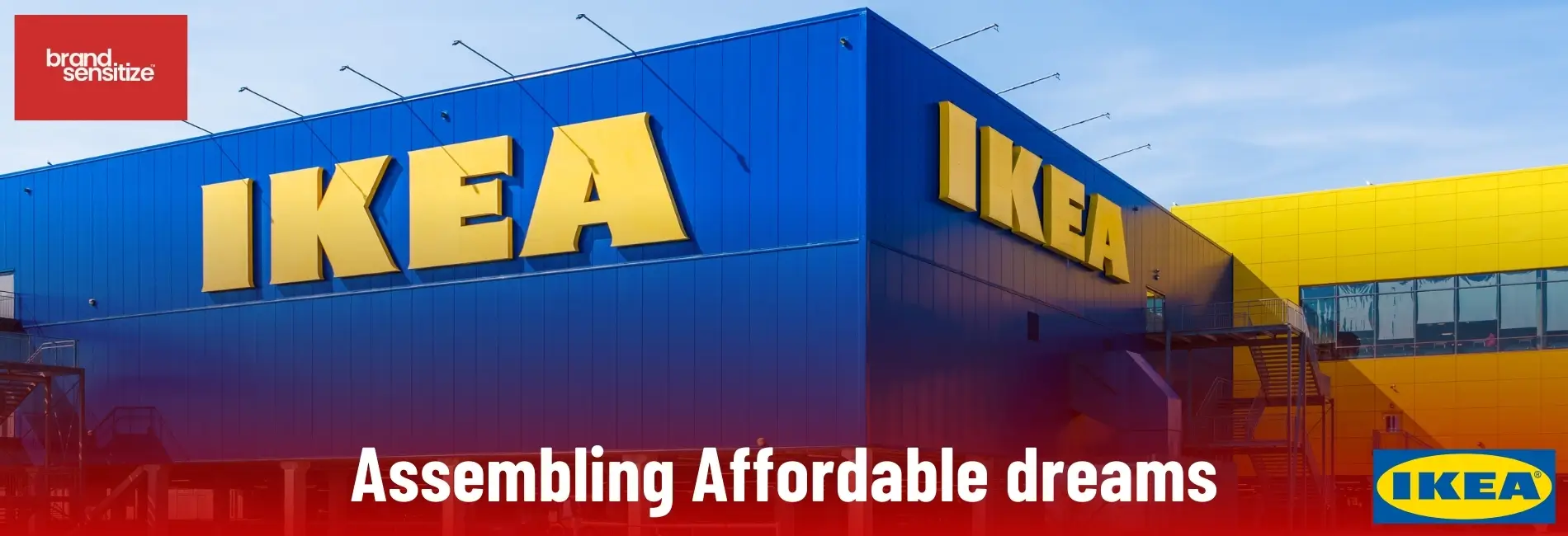
IKEA closed fiscal year 2024 with €45.1 billion in retail sales (ending August 31, 2024). The company employs around 216,000 people worldwide, supporting operations across 483 stores in 63 countries.
From its earliest days, IKEA has been built on a simple brand philosophy: make daily life easier. Its ready-to-assemble designs and focus on affordability, functionality, and innovation have made it a household name across continents.
More Than Furniture: A Lifestyle Brand
IKEA isn’t just about tables, sofas, or wardrobes. It’s about transforming everyday spaces into something inspiring and personal. Customers don’t just shop, they eat in IKEA cafés, drop their kids at play zones, and use AR-powered apps to imagine new possibilities at home.
The brand has become a global lifestyle symbol, rooted in accessibility, sustainability, and happiness. By fostering emotional connections, IKEA makes itself relevant far beyond the checkout line.
How IKEA Builds Its Brand
IKEA manages its identity with a clear and consistent promise: affordable, functional, Swedish. Here’s how that shows up at every touchpoint:
- Consistent global identity – Blue-and-yellow visuals, Scandinavian product names, Swedish meatballs, and a playful tone create instant recognition worldwide.
- A shared vision – “A better everyday life for the many” unites employees, franchisees, and customers across cultures.
- Affordability by design – Flat-pack concepts, DIY assembly, and scaled supply chains keep prices low without sacrificing style.
- Inspiration at every visit – Maze-like showrooms, mock rooms, and cafés turn a shopping trip into an aspirational day out.
- Digital immersion – AR apps let you “place” furniture at home, while AI chatbots and planning assistants extend support 24/7.
- Engaging storytelling – Catalog imagery, room planners, and bold social campaigns help customers picture possibilities.
- Community and local relevance – Store layouts, food menus, and influencer partnerships adapt to local tastes while preserving global brand codes.
Listening and Adapting
IKEA constantly measures customer perceptions through digital surveys, loyalty programs, online reviews, and frontline feedback. These insights help the company improve products, refine store layouts, and enhance service quality.
The Role of Technology
Technology has become central to IKEA’s strategy. At Ingka IKEA Group, Bryant Noice leads the technology function, covering architecture, infrastructure, security, and non-retail strategy.
AI now plays a major role across the business:
- Generative design tools and AR planners help customers visualize entire spaces.
- AI chatbots answer service and design questions 24/7.
- Demand sensing models improve forecasting and inventory flow.
- Warehouse drones and route optimization streamline fulfillment and cut waste.
- Smart assistants and apps simplify shopping, both in-store and online.
Sustainability also runs through IKEA’s innovation agenda, with eco-friendly product ranges designed to satisfy both customer expectations and employee values.
Technology Partnerships
IKEA partners with Apple and Microsoft on AI and digital projects, using internal copilots for faster content creation and idea generation. With Google Cloud Analytics and Google Maps Platform, IKEA improves store locators, provides local inventory visibility, and uses data-driven insights to upgrade customer experiences.
A Balance of Global and Local
BrandSensitize™ research highlights how IKEA maintains global consistency with local relevance. Customers recognize the familiar Swedish codes, but also appreciate the local touches, whether that’s store menus, influencer collaborations, or cultural adaptations.
This balance, combined with immersive experiences and straightforward storytelling, ensures IKEA continues to make homes more accessible, innovative, and sustainable, living up to its vision of a better everyday life for the many.
Comments
Keith Nicks is EVP and Chief Digital & Commercial Officer for Ahold Delhaize USA, overseeing
omnichannel marketing, retail media, and e-commerce for U.S. brands. Tim Bork is the Chief Commercial
Officer for Ahold Delhaize Europe & Indonesia, focusing on local brands and responsible for growth,
including marketing and customer experience.
With nearly €96 billion in projected 2025 revenue, Ahold Delhaize ranks among the top 10 global
retailers, operating over 6,700 stores across multiple formats, including Albert Heijn, Delhaize, Food Lion,
Giant, Hannaford, and Stop & Shop.
6,700 stores powered by one procurement platform – a scale that makes others jealous.
For customers, Ahold isn’t just a grocery retailer; it’s a trusted lifestyle partner that combines the
intimacy of local shopping with the innovation and value of global retail leadership.
Ahold’s brands, such as Albert Heijn, Stop & Shop, and Giant, represent 37 years of average customer
relationships—customers don’t just shop there; they grow up with these brands, creating emotional
connections that transcend transactions.
After gaining thirty million loyalty members, Ahold demonstrated that personalization consistently
outperforms promotion.
BrandSensitize™ research shows that Ahold Delhaize operates with a decentralized marketing and brand
building approach, where marketing functions are embedded within:
- Brand-specific leadership (each local brand has its own marketing teams.
- Regional commercial officers who oversee marketing alongside broader commercial
responsibilities. - Digital and omnichannel specialists who handle modern marketing channels.
Ahold Delhaize’s Brand Building Initiatives:
Sustainability campaign: €50M investment reached 10M consumers, delivering a 20% boost in
sustainable product sales and generating €400M in revenue.
Digital Marketing: €150M digital budget achieved 25% higher engagement, 2.6% click-through rates (vs
1.9% industry standard), and built 500K+ social media following.
Loyalty Program: 30M members across brands with 85% customer penetration, driving 75% of total sales
and contributing €1B annually—10% better retention than competitors.
Strategic Brand Partnerships: 100+ collaborative campaigns with CPG brands, including Coca-Cola,
generated €600M in additional revenue through joint promotions.
Omnichannel Investment: A $1 billion price investment initiative, combined with AI-powered
personalization, aims to achieve an 80% loyalty sales penetration by 2028.
Strategic marketing drives measurable business results—from sustainability messaging to digital-first
loyalty programs, Ahold Delhaize demonstrates that well-executed brand-building campaigns deliver
both customer engagement and bottom-line growth on a global scale.
Ahold Delhaize’s Strategic Technology Partnerships:
- W23 Global VC Fund: $125M investment with Tesco, Woolworths & others backing AI startups
like Harmonya & Protex AI - Zycus Partnership: Source-to-Pay suite powering procurement across 6,700+ stores globally
- Hanshow Technology: Electronic shelf labels + innovation labs across all European locations.
- Inmar Intelligence: $141M in customer savings delivered through personalized digital coupons.
- DoorDash Collaboration: Tripled order volumes through enhanced last-mile delivery integration.
- Internal AI Innovation: MaxiGPT, LionGPT & Albot assistants deployed across the Serbian,
Belgian, and Czech markets. - New Tech Studio: AD/01 in Bucharest targeting 250+ tech talents for digital acceleration.
Zycus has licensed its comprehensive Source-to-Pay suite to Ahold Delhaize, including eSourcing,
Contract Lifecycle Management (CLM), and Supplier Management platforms.
TCS’s relationship with Ahold Delhaize marks a mature, strategic partnership focused on digital
transformation and supply chain technology.
Wipro partnered with Capgemini as one of the most significant retail transformation initiatives in the
world at Ahold USA.
Capgemini powers Ahold Delhaize’s end-to-end transformation, developing blockchain technology use
cases for Ahold Delhaize’s supply chain and leveraging its expertise in business transformation, as well as
its understanding of Ahold’s industry and operations.
Traditional retailers, equipped with AI and Robotics, will surpass pure digital players by 2030.
The key is to position Ahold not as just another retail success story, but as the company that has
rewritten the rules of digital transformation for every traditional business watching.
Leave a Reply