
Recent Posts

Global Top 100 Retailers 2025 List
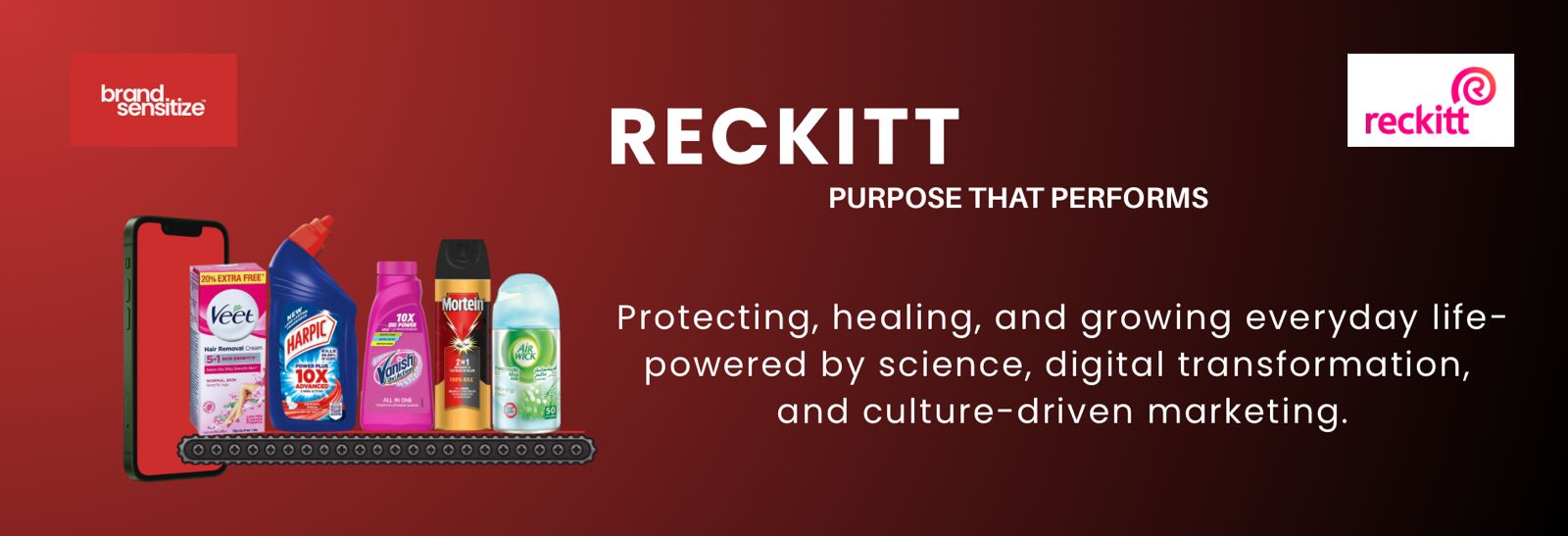
Reckitt: Protecting, Healing & Nurturing Through Purpose-Led Growth
follow us
Scaling GCCs in the AI-First Era: From Captives to Catalysts of Innovation.
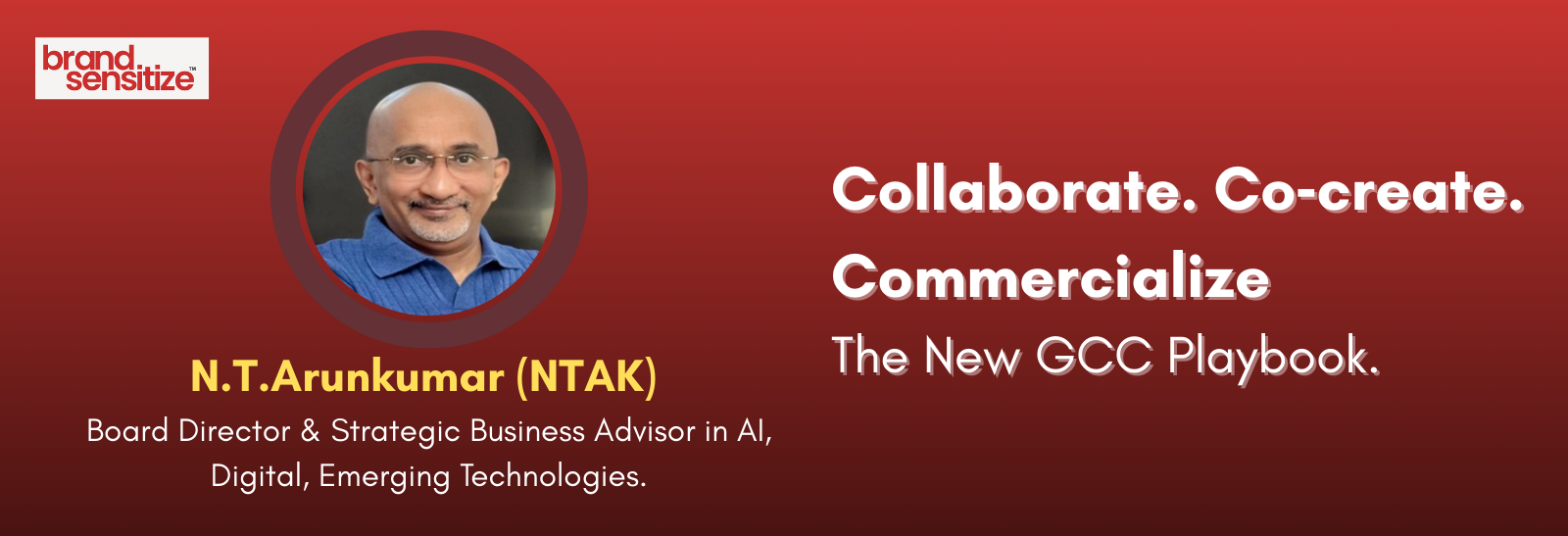
In research discussions with Mr. N.T. Arunkumar (NTAK), a business-technology leader who has witnessed the evolution of GCCs over the last 3 decades, from the front lines of markets and Boards with winning brands such as Citibank, Dun & Bradstreet, UBS, and Telstra. Like many leaders at the forefront of digital transformation, NTAK strongly believes that GCC 3.0 is no longer about cost, not even uniquely about “talent at scale,” but about becoming an AI‑first experiential learning platform for the enterprise. NTAK says that not just functional CxOs but also CEOs and Boards are now actively engaged and leading the Global Capability building strategy as a critical lever for market growth and customer success.
How does one scale Global Capability Centers to accelerate digital transformation, especially in the AI-first era, and what key lessons apply to enterprises developing GCCs?
GCCs have evolved from the BOT (Build, Operate, Transfer), ODC (Offshore Development Center), GDC(Global Delivery Center), and captive centers era to today’s GCC 3.0 model. GCC 1.0 was largely about labor and cost arbitrage; GCC 2.0 professionalized vertical functions, streamlined product development and process improvements, and diversified the “offshore-able” portfolio. GCC 3.0 will focus on experience centers, AI-first leadership, and serving as a strategic bridge that helps businesses experiment faster and smarter.
In this new phase, scale is no longer the only badge of success. Large GCCs are growing larger, while new, smaller centers win by playing sharp, niche roles. The real differentiator is the impact on business outcomes – the ability to improve customer journeys, accelerate innovation, and enhance the brand experience – beyond efficiency gains.
India is uniquely positioned to power GCC 3.0. A young, deep talent pool, a robust education pipeline, and exposure across the full stack of skills – engineering, product, design, operations, data, and AI – make India a “big lake” for future-ready global teams.
The challenge, however, is leadership transformation. The new GCC leader is now also a brand custodian, an advocate for new products and market opportunities, and a partner with the business on risk. This is a significant leap from the major “delivery mandate” of the earlier era.
With your blend of consumer and provider experience in BFSI, which innovative partnership models have proven most effective for monetizing captive technology assets, such as IT/BPO utilities and platforms?
The ecosystem of startups, hyperscalers, new types of service providers, and domain specialists enables enterprises to assemble best‑of‑breed partnerships around their GCCs. Startups are a new and interesting mix in the ecosystem, and the ability to blend this new sourcing into the GCC strategy is critical – not just as a provider or supplier but as a co-innovation partner; joint product development, creation and management of IP, and “experimenting at the edge” of the enterprise are emerging strategic trends in
the GCC evolution.
This shifts the GCC brand narrative from “offshore service center” to “co-pilot in the mothership”. The most successful GCC leaders now work for the business and the customer first; labels such as IT, finance, or operations become secondary. The winning model is a true mothership–baby ship relationship, anchored in shared goals such as “customer first” and “business first”, where customer experience is designed end‑to‑end and omnichannel, never in silos.
As BrandSensitize™ research also indicates, many brands are moving to build company-owned GCCs. For traditional system integrators and large India-centered IT services companies, this also means that their existing clients are increasingly becoming their talent and capability competitors! The clients they serve are most likely building the same – if not more sophisticated – capabilities with their GCCs, which results in higher talent retention.
The most prominent GCC players across industries already employ thousands of deep‑tech professionals in their own hubs. GCC brands that stand out will lead with AI‑first thinking, integrate the 3 Es of enterprise value (Efficiency – Effectiveness – Experience), and build strong partnerships with startups, mid‑size, and product/IP‑led companies—bundling talent and capabilities into a distinctive, trusted global brand. (For example, some BFSI leaders and GCC centers are setting new benchmarks for seamless, emotionally aware CX, while many traditional banks are still struggling to deliver it consistently at scale—highlighting how, for example, customer‑journey‑based CX has become the true differentiator between future‑ready brands and those at risk of being left behind.)
As a Board Director and Advisor on digital business models and M&A, what emerging AI/ML driven growth strategies do you see businesses transitioning from traditional products and services to platform-led innovation?
AI is now mainstream and real. While the ROI story for different use cases is still developing, embedding intelligence into processes, products, operating models, and the customer experience is no longer optional. Board discussions are driving the priority of adopting AI tools across the functional spectrum, most importantly in areas that directly impact the customer and drive revenue growth. Along with Cyber Security, AI is the hottest topic on Boards today.
Two stand-out trends I am experiencing and learning are:
(1) faster and more committed transition from ‘pilots’ to production-grade solutions (AI in customer service centers, digital marketing, risk, cyber security, and workflow & process intelligence are leading candidates in the enterprise).
The idea is also that AI will overcome the talent shortages and complexities in these areas.
(2) More than any other technology, AI/ML is redefining how services can be ‘productized’ at scale and made flexible for multi-party collaboration, significantly redefining the customer value proposition. Imagine Agentic AI functions in BFSI that integrate multiple types of service innovation into a marketplace to deliver new value to a broader range of customers. For example, collaboration using AI (in a platform-driven business ecosystem) suddenly becomes a new market creation.
Still early days, but we’re seeing promising innovations, especially in the Healthcare and
Consumer Products industries.
India’s GCCs Are Redefining Global Transformation — Smarter, Faster, AI-First.
Comments
Keith Nicks is EVP and Chief Digital & Commercial Officer for Ahold Delhaize USA, overseeing
omnichannel marketing, retail media, and e-commerce for U.S. brands. Tim Bork is the Chief Commercial
Officer for Ahold Delhaize Europe & Indonesia, focusing on local brands and responsible for growth,
including marketing and customer experience.
With nearly €96 billion in projected 2025 revenue, Ahold Delhaize ranks among the top 10 global
retailers, operating over 6,700 stores across multiple formats, including Albert Heijn, Delhaize, Food Lion,
Giant, Hannaford, and Stop & Shop.
6,700 stores powered by one procurement platform – a scale that makes others jealous.
For customers, Ahold isn’t just a grocery retailer; it’s a trusted lifestyle partner that combines the
intimacy of local shopping with the innovation and value of global retail leadership.
Ahold’s brands, such as Albert Heijn, Stop & Shop, and Giant, represent 37 years of average customer
relationships—customers don’t just shop there; they grow up with these brands, creating emotional
connections that transcend transactions.
After gaining thirty million loyalty members, Ahold demonstrated that personalization consistently
outperforms promotion.
BrandSensitize™ research shows that Ahold Delhaize operates with a decentralized marketing and brand
building approach, where marketing functions are embedded within:
- Brand-specific leadership (each local brand has its own marketing teams.
- Regional commercial officers who oversee marketing alongside broader commercial
responsibilities. - Digital and omnichannel specialists who handle modern marketing channels.
Ahold Delhaize’s Brand Building Initiatives:
Sustainability campaign: €50M investment reached 10M consumers, delivering a 20% boost in
sustainable product sales and generating €400M in revenue.
Digital Marketing: €150M digital budget achieved 25% higher engagement, 2.6% click-through rates (vs
1.9% industry standard), and built 500K+ social media following.
Loyalty Program: 30M members across brands with 85% customer penetration, driving 75% of total sales
and contributing €1B annually—10% better retention than competitors.
Strategic Brand Partnerships: 100+ collaborative campaigns with CPG brands, including Coca-Cola,
generated €600M in additional revenue through joint promotions.
Omnichannel Investment: A $1 billion price investment initiative, combined with AI-powered
personalization, aims to achieve an 80% loyalty sales penetration by 2028.
Strategic marketing drives measurable business results—from sustainability messaging to digital-first
loyalty programs, Ahold Delhaize demonstrates that well-executed brand-building campaigns deliver
both customer engagement and bottom-line growth on a global scale.
Ahold Delhaize’s Strategic Technology Partnerships:
- W23 Global VC Fund: $125M investment with Tesco, Woolworths & others backing AI startups
like Harmonya & Protex AI - Zycus Partnership: Source-to-Pay suite powering procurement across 6,700+ stores globally
- Hanshow Technology: Electronic shelf labels + innovation labs across all European locations.
- Inmar Intelligence: $141M in customer savings delivered through personalized digital coupons.
- DoorDash Collaboration: Tripled order volumes through enhanced last-mile delivery integration.
- Internal AI Innovation: MaxiGPT, LionGPT & Albot assistants deployed across the Serbian,
Belgian, and Czech markets. - New Tech Studio: AD/01 in Bucharest targeting 250+ tech talents for digital acceleration.
Zycus has licensed its comprehensive Source-to-Pay suite to Ahold Delhaize, including eSourcing,
Contract Lifecycle Management (CLM), and Supplier Management platforms.
TCS’s relationship with Ahold Delhaize marks a mature, strategic partnership focused on digital
transformation and supply chain technology.
Wipro partnered with Capgemini as one of the most significant retail transformation initiatives in the
world at Ahold USA.
Capgemini powers Ahold Delhaize’s end-to-end transformation, developing blockchain technology use
cases for Ahold Delhaize’s supply chain and leveraging its expertise in business transformation, as well as
its understanding of Ahold’s industry and operations.
Traditional retailers, equipped with AI and Robotics, will surpass pure digital players by 2030.
The key is to position Ahold not as just another retail success story, but as the company that has
rewritten the rules of digital transformation for every traditional business watching.
Leave a Reply