
BrandSensitize | Strategic Brand Evaluation & Marketing Advisory

Menu
Recent Posts
Scaling GCCs in the AI-First Era: From Captives to Catalysts of Innovation.
December 17, 2025
No Comments
Mars: Building a Purpose-Led Global Brand Through Innovation & Cultural Relevance
November 18, 2025
No Comments
follow us
From Bengaluru to Minneapolis: Target's Global Innovation Playbook
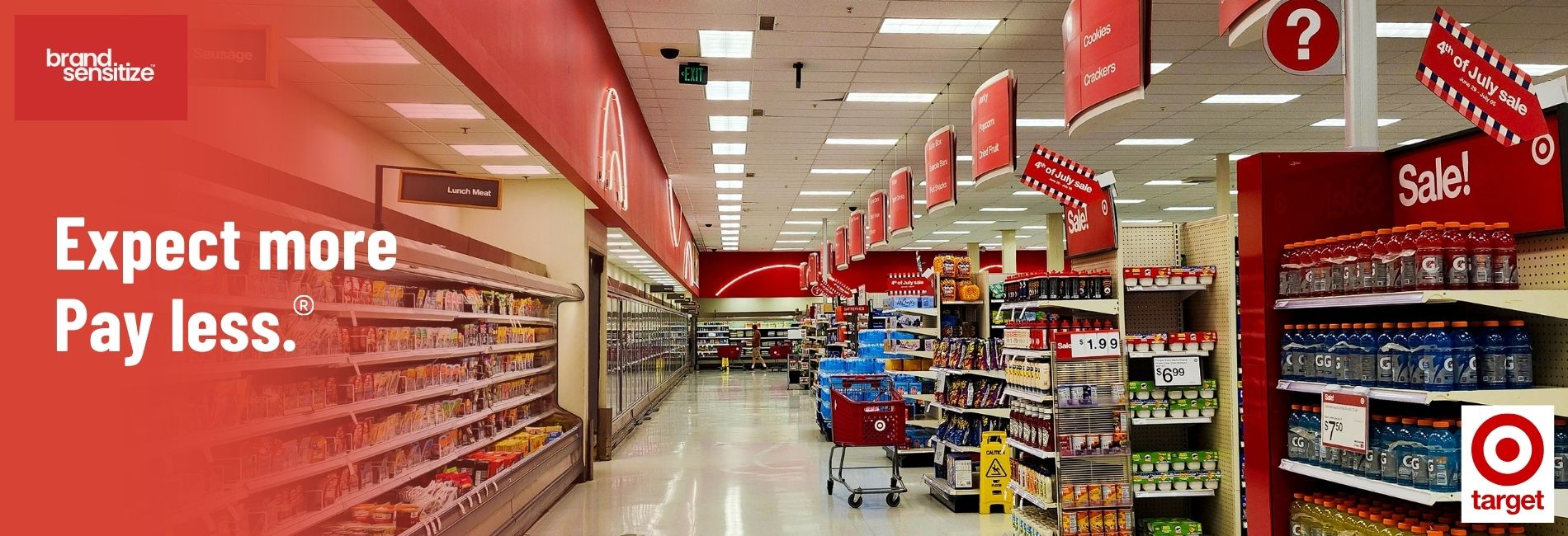
Target has quietly but consistently positioned itself as one of America’s most resilient retailers. The company’s latest financial reports and corporate filings demonstrate the strength of its foundation as it heads into the future.
Strong Financial Performance
For fiscal year 2025, Target reported $106.57 billion in total revenue, a clear indication of its ability to strike a balance between affordability and quality. With a workforce that has grown to over 440,000 employees globally, the company added 25,000 new jobs year-over-year, a 6.02% increase from 2024. This brings Target’s revenue per employee to $240,091, highlighting operational efficiency at scale.
Retail Footprint and Diversification
Target currently operates 1,981 stores across the U.S., supported by a broad mix of retail, logistics, corporate, and digital roles, as well as subsidiaries like Shipt (same-day delivery) and Roundel (its in-house media network).
The company’s revenue is well-diversified across categories:
- Food and Beverage: $23.83 billion (22.36% of revenue)
- Beauty & Household Essentials: $18.61 billion (17.47% of revenue)
- Additional growth drivers include apparel, home goods, and digital commerce.
Purpose, Promise, and Culture
What makes Target more than just a retailer is its clarity of brand identity.
- Promise: “Expect More. Pay Less.” — quality at affordable prices.
- Purpose: “To help all families discover the joy of everyday life.”
- Aspiration: “Co-create an equitable and regenerative future with our guests, partners, and communities.”
- Culture: “Care, Grow, Win Together.” — a framework that guides team members to align with shared values.
These statements are more than taglines. They shape how Target designs stores, interacts with communities, and builds its workforce.
Strategic Growth and Global Capabilities
Looking forward, Target has laid out an ambitious $15 billion expansion plan, strengthening its U.S. retail footprint while scaling its India technology hub into a cornerstone for digital innovation. The company continues to invest in AI-driven transformation, boosting supply chain efficiency, personalizing customer experiences, and modernizing operations.
At its core, Target is not just about selling products. It’s about providing style and value while fostering inclusive, community-driven growth. With its balance of financial strength, cultural clarity, and forward-looking strategy, Target is setting a benchmark for what a modern retailer should look like in 2025 and beyond.
India Operations highlights:
- 4,500+ associates in Bengaluru (25% of global workforce)
- 1,700+ engineers driving core retail systems innovation
- 8TB+ daily data processing powering predictive analytics
- 124+ GitHub repositories showcasing open-source leadership
Under CIPO Prat Vemana’s leadership, Target’s “extended headquarters” model in Bengaluru demonstrates how strategic global talent deployment drives retail transformation. From Store Companion AI tools to supply chain optimization, India operations are crucial to Target’s competitive edge.
Target has become a retail leader in AI implementation, strategically deploying AI across various business functions to boost CX, increase sales, and optimise operations.
Target has introduced personalized AI shopping assistants that have produced remarkable results, achieving a 35% boost in average order value.
- Integrated database enabling accurate recommendations
- Real-time updates recommending dynamic options when preferred items are out of stock
- Advanced analytics to gauge shopping patterns and preferences
Target has integrated AI algorithms to analyze historical data and market trends, allowing it to predict customer behavior and identify high-value prospects.
Hyper-Personalization Engine
Target has built a personalization system that collects data from various touchpoints—such as in-store purchases, online shopping habits, and mobile app interactions. The AI models forecast customer preferences and provide personalized product suggestions across all digital platforms. These efforts help increase conversion rates on personalized marketing campaigns, strengthen customer loyalty through repeat purchases, and extend the customer lifecycle by offering more relevant experiences
Automated Checkout Systems
Target has introduced AI-powered automated checkout systems that significantly cut down wait times and speed up transactions. Customer satisfaction scores have increased noticeably, with feedback showing a higher appreciation for the speed and convenience of these systems.
Omnichannel Integration
Like industry giants such as Walmart, Target has also implemented AI technology to improve omnichannel (POS) services in its physical stores and online channels. This approach enables personalized support for customers, regardless of how they shop, aligning with industry forecasts that 85% of customers want to engage with a brand within a seamless and continuous ecosystem.
Excellence in Operations via AI in Supply Chain Optimisation
Target uses predictive analytics to improve inventory management and determine the best stock levels for its stores. The review of Target’s inventory and sales data is done through stock management to keep accurate demand and stock records. This method helps align demand with supply, cuts storage costs, boosts supply chain efficiency, and enhances customer satisfaction. As a result, it also reduces operational costs while supporting higher sales volumes and more effective resource use.
AI-Driven Marketing Strategies.
Target is adopting an AI-driven marketing strategy that leverages analytics and AI/ML principles to shape the customer engagement journey. The AI algorithms help with customer segmentation based on behaviors and preferences, allowing for personalized marketing messages across email, social media, and mobile notifications. This has resulted in better management of marketing campaigns, higher clickthrough and conversion rates on personalized ads, and improved customer experience through relevant communications.
Future AI Initiatives
- Target continues expanding its AI capabilities with several planned enhancements in AR integration for marketing campaigns, creating immersive product experiences.
- Natural Language Processing (NLP) to improve customer service interactions.
- Mobile app integration for smartphone-based item scanning and checkout.
- Hyper-personalised in-store experiences, including smart mirrors and AI-powered shopping assistants.
Target’s investments in AI demonstrate how retailers can leverage AI to transform traditional operations, enhance customer loyalty, and meet customer expectations.
Target’s comprehensive AI strategy highlights how artificial intelligence is transforming retail by enhancing the customer experience in great detail. Delivering the right product at the right time isn’t by chance; it’s because of one of the most advanced and responsive supply chains in retail. Powered by automation, predictive analytics, and same-day fulfillment models, Target has revolutionized retail logistics. With stores functioning as mini-fulfillment centers, it has built a system that is fast, flexible, and highly customer-focused.
Target’s brand positioning is prominent: affordable design meets accessible trend.
Target is known for being stylish yet affordable. It resonates with shoppers who seek value without sacrificing style. The brand fosters a more curated, emotional connection.
Lifestyle branding that emotionally connects. Target wins hearts through personality, design, and curation, not just price.
Target enhances the customer experience by monitoring consumer perceptions, responding to multichannel feedback, and implementing targeted upgrades like curbside pickup with Starbucks and express self-checkout. Real-time analysis detects friction points, while employee insights help develop solutions. Closing the loop and combining innovation with a personalized touch fosters trust, satisfaction, and loyalty.
Target shows strategic resilience with bold growth investments despite challenging market conditions. Their $15 billion expansion plan through 2030 includes opening over 300 new stores—20 of which will open by 2025—as well as enhancing digital capabilities, omnichannel experiences, and AI-powered supply chain operations.
Based on BrandSensitize™ research about Target’s technology strategy and industry partnerships, here are the top technology partners supporting Target’s digital transformation and operations.
Strategic AI and Consulting Partners
Bain & Company
Target has partnered with Bain to develop and launch several generative AI applications, demonstrating its commitment to AI-driven retail innovation. This collaboration aims to create AI use cases that enhance customer experience and operational efficiency.
Core Technology Infrastructure Partners
Microsoft
Microsoft supports Target’s cloud infrastructure and AI initiatives through Azure services, aligning with industry trends where major retailers utilize Microsoft’s enterprise solutions for scalability and digital transformation.
Google Cloud
Target partners with Google Cloud for data analytics, AI capabilities, and support for customer experience platforms.
Amazon Web Services (AWS)
Target also partners with AWS for specific cloud services and infrastructure needs.
Enterprise Acceleration Office Partners
Target’s Enterprise Acceleration Office works with various technology partners to drive:
- Digital platform modernisation
- Omnichannel experience enhancement
- AI-powered inventory management systems
- Customer loyalty platform optimisation
Supply Chain and Operations Partners
Technology Vendors Supporting Target Plus Marketplace
As Target grows its third-party marketplace from $1 billion to over $5 billion by 2030, it partners with various e-commerce platform providers and marketplace technology vendors.
Emerging Technology Partners
AI and Machine Learning Specialists
Target partners with specialised AI companies for:
- Predictive analytics for inventory optimisation
- Personalised customer experience platforms
- Automated checkout systems
- Supply chain optimisation algorithms
Target’s approach to technology partnerships reflects its $15 billion growth strategy through 2030, emphasising:
- Multi-vendor strategy to avoid single-point dependencies
- Best-of-breed solutions across different technology domains
- Scalable partnerships that support their 300+ store expansion plan
- Innovation-focused collaborations, particularly in AI and automation.
Target’s technology focus highlights its leadership in digital transformation, AI integration, setting cybersecurity guardrails, and providing an omnichannel customer experience—all crucial elements that give the company a competitive advantage in the evolving retail landscape.
Comments
Keith Nicks is EVP and Chief Digital & Commercial Officer for Ahold Delhaize USA, overseeing
omnichannel marketing, retail media, and e-commerce for U.S. brands. Tim Bork is the Chief Commercial
Officer for Ahold Delhaize Europe & Indonesia, focusing on local brands and responsible for growth,
including marketing and customer experience.
With nearly €96 billion in projected 2025 revenue, Ahold Delhaize ranks among the top 10 global
retailers, operating over 6,700 stores across multiple formats, including Albert Heijn, Delhaize, Food Lion,
Giant, Hannaford, and Stop & Shop.
6,700 stores powered by one procurement platform – a scale that makes others jealous.
For customers, Ahold isn’t just a grocery retailer; it’s a trusted lifestyle partner that combines the
intimacy of local shopping with the innovation and value of global retail leadership.
Ahold’s brands, such as Albert Heijn, Stop & Shop, and Giant, represent 37 years of average customer
relationships—customers don’t just shop there; they grow up with these brands, creating emotional
connections that transcend transactions.
After gaining thirty million loyalty members, Ahold demonstrated that personalization consistently
outperforms promotion.
BrandSensitize™ research shows that Ahold Delhaize operates with a decentralized marketing and brand
building approach, where marketing functions are embedded within:
- Brand-specific leadership (each local brand has its own marketing teams.
- Regional commercial officers who oversee marketing alongside broader commercial
responsibilities. - Digital and omnichannel specialists who handle modern marketing channels.
Ahold Delhaize’s Brand Building Initiatives:
Sustainability campaign: €50M investment reached 10M consumers, delivering a 20% boost in
sustainable product sales and generating €400M in revenue.
Digital Marketing: €150M digital budget achieved 25% higher engagement, 2.6% click-through rates (vs
1.9% industry standard), and built 500K+ social media following.
Loyalty Program: 30M members across brands with 85% customer penetration, driving 75% of total sales
and contributing €1B annually—10% better retention than competitors.
Strategic Brand Partnerships: 100+ collaborative campaigns with CPG brands, including Coca-Cola,
generated €600M in additional revenue through joint promotions.
Omnichannel Investment: A $1 billion price investment initiative, combined with AI-powered
personalization, aims to achieve an 80% loyalty sales penetration by 2028.
Strategic marketing drives measurable business results—from sustainability messaging to digital-first
loyalty programs, Ahold Delhaize demonstrates that well-executed brand-building campaigns deliver
both customer engagement and bottom-line growth on a global scale.
Ahold Delhaize’s Strategic Technology Partnerships:
- W23 Global VC Fund: $125M investment with Tesco, Woolworths & others backing AI startups
like Harmonya & Protex AI - Zycus Partnership: Source-to-Pay suite powering procurement across 6,700+ stores globally
- Hanshow Technology: Electronic shelf labels + innovation labs across all European locations.
- Inmar Intelligence: $141M in customer savings delivered through personalized digital coupons.
- DoorDash Collaboration: Tripled order volumes through enhanced last-mile delivery integration.
- Internal AI Innovation: MaxiGPT, LionGPT & Albot assistants deployed across the Serbian,
Belgian, and Czech markets. - New Tech Studio: AD/01 in Bucharest targeting 250+ tech talents for digital acceleration.
Zycus has licensed its comprehensive Source-to-Pay suite to Ahold Delhaize, including eSourcing,
Contract Lifecycle Management (CLM), and Supplier Management platforms.
TCS’s relationship with Ahold Delhaize marks a mature, strategic partnership focused on digital
transformation and supply chain technology.
Wipro partnered with Capgemini as one of the most significant retail transformation initiatives in the
world at Ahold USA.
Capgemini powers Ahold Delhaize’s end-to-end transformation, developing blockchain technology use
cases for Ahold Delhaize’s supply chain and leveraging its expertise in business transformation, as well as
its understanding of Ahold’s industry and operations.
Traditional retailers, equipped with AI and Robotics, will surpass pure digital players by 2030.
The key is to position Ahold not as just another retail success story, but as the company that has
rewritten the rules of digital transformation for every traditional business watching.
Leave a Reply